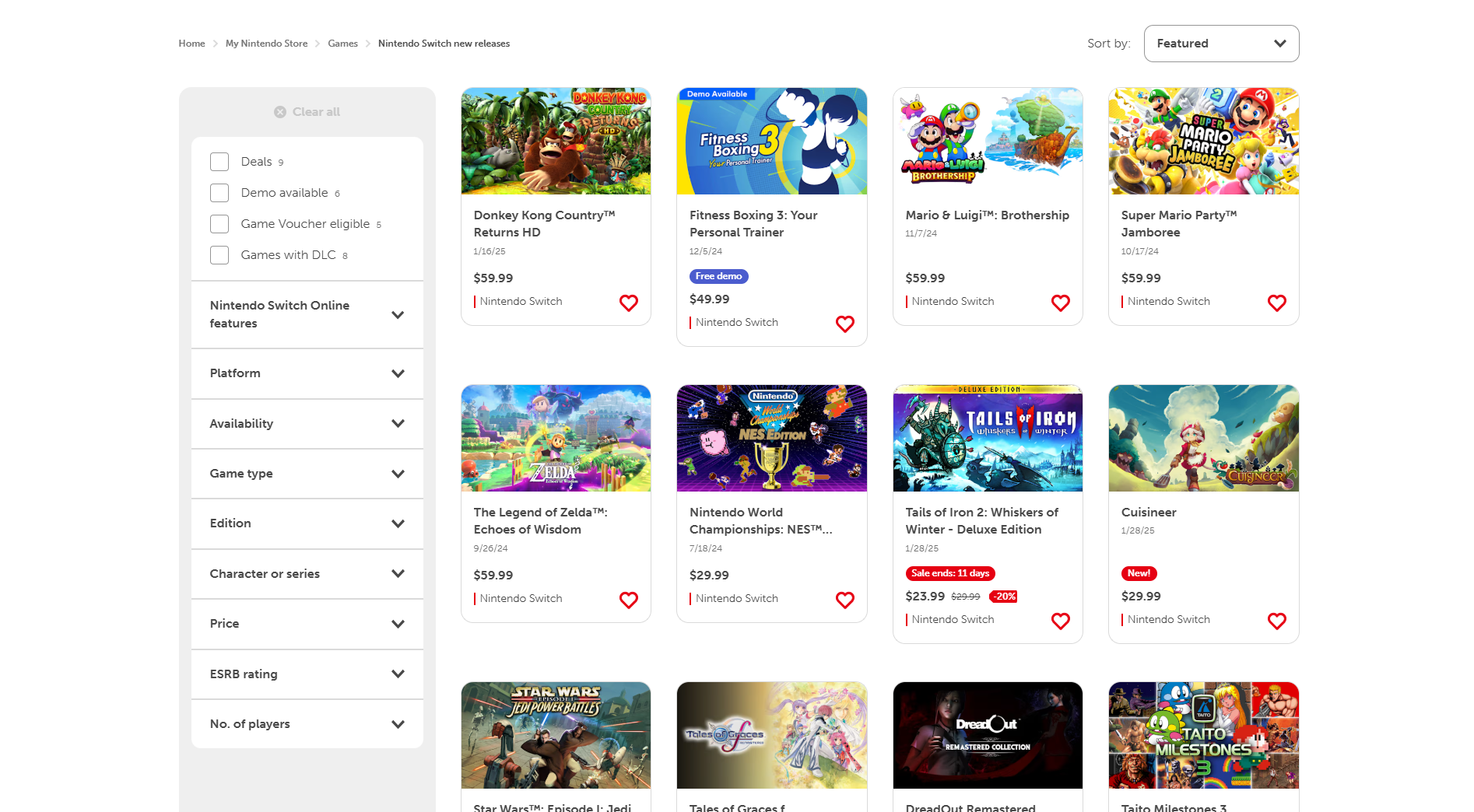
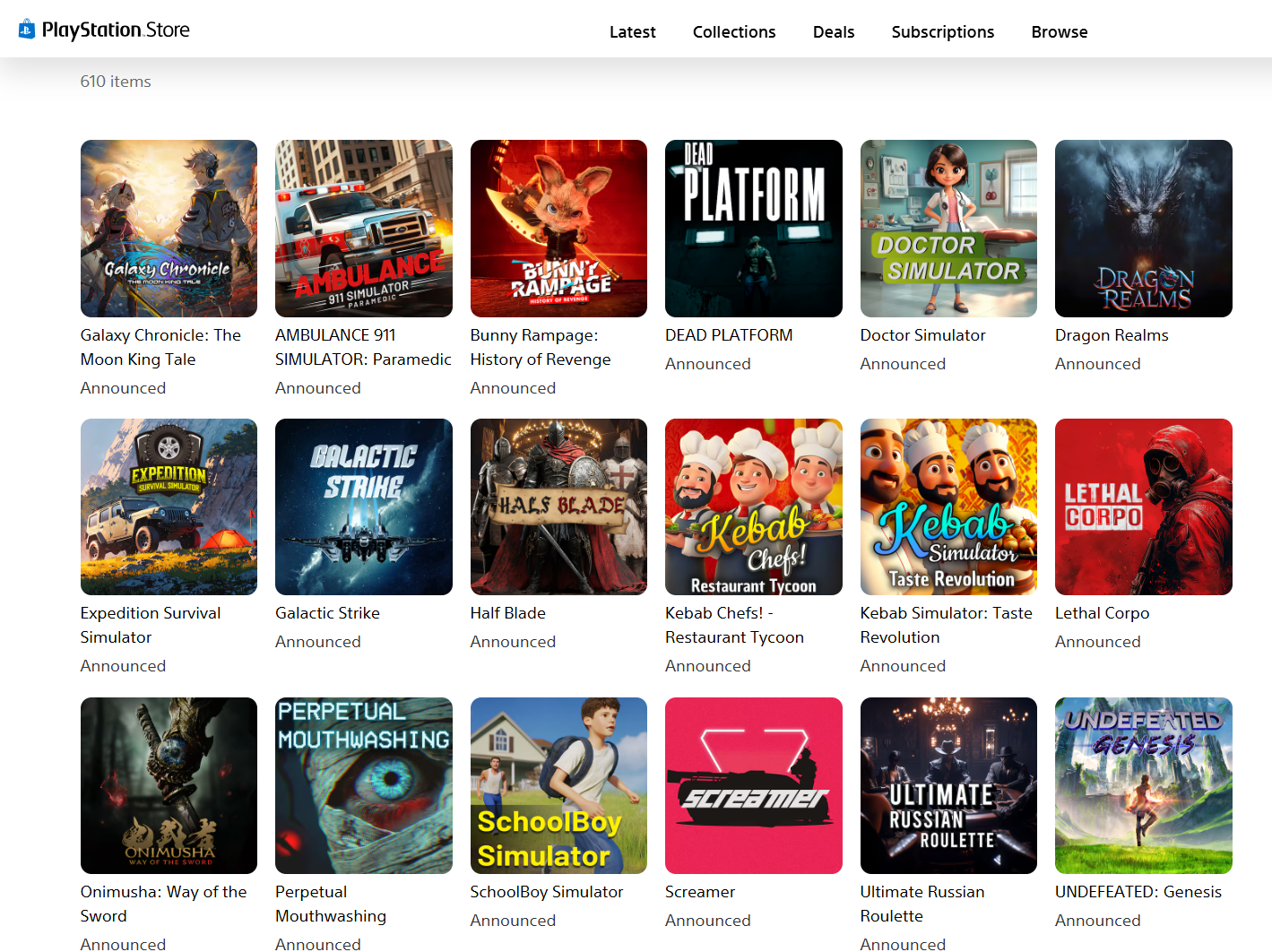
The PlayStation Store and Nintendo eShop are experiencing an influx of low-quality games, often described as "slop," raising concerns among users. These games, frequently simulation titles, utilize generative AI for assets and misleading store pages, deceiving consumers. This issue, initially prominent on the eShop, has recently spread to the PlayStation Store, particularly affecting the "Games to Wishlist" section.
The problem extends beyond simply "bad" games; it's the sheer volume of nearly identical, low-effort titles overwhelming legitimate releases. These games often mimic popular titles, utilize poorly rendered AI-generated art, and suffer from technical flaws and limited gameplay. A small number of companies appear responsible for this surge, often operating with limited public information and frequently changing names.
Users are demanding stricter storefront regulation, particularly given the eShop's declining performance due to the increased game volume. To understand the situation, this article investigates the game release process across major storefronts (Steam, Xbox, PlayStation, and Nintendo Switch).
The Certification Process
Interviews with eight anonymous game developers and publishers revealed the general release process: Developers pitch their games to platform holders (Valve, Sony, Microsoft, or Nintendo), gaining access to development portals and devkits (for consoles). They then complete forms detailing game specifications and undergo certification ("cert"), where the platform holder verifies compliance with technical requirements, legal standards, and ESRB ratings. Age ratings are particularly scrutinized.
Contrary to popular belief, certification isn't a quality assurance check; developers are responsible for pre-submission QA. Platform holders primarily ensure technical compliance. Rejection often comes with minimal explanation, particularly from Nintendo.
Store Page Review
Platform holders require accurate game representation in screenshots, but enforcement varies. While Nintendo and Xbox review store page changes before launch, PlayStation performs a single check near launch, and Valve only reviews pages initially. Diligence in verifying store page accuracy against the actual game is inconsistent, often relying on developers' honesty. Consequences for misleading information usually involve content removal, not developer delisting. None of the console storefronts have specific rules against generative AI use in games or marketing materials, though Steam requests disclosure.
The "Slop" Problem: A Deeper Dive
The disparity in "slop" across storefronts stems from differences in developer vetting. Microsoft vets games individually, while Nintendo, Sony, and Valve vet developers. This allows approved developers to easily release multiple games on Nintendo and PlayStation, leading to the current glut. Xbox's game-by-game approval process makes it less susceptible.
Nintendo's developer approval process is seen as particularly vulnerable to exploitation, allowing the release of numerous low-quality games. Some developers exploit the maximum discount period (28 days) on the Nintendo eShop, repeatedly releasing similar bundles to maintain top-of-list visibility. Similar issues exist on PlayStation due to the "Games to Wishlist" sorting system, which prioritizes unreleased games alphabetically.
While generative AI is often blamed, it's not the sole issue. Many "slop" games use generic art, not solely AI-generated assets. The core problem lies in the lack of robust store page verification and developer vetting processes. Xbox, despite its relative lack of "slop," may be less likely to discourage AI use due to its investments in the technology.
Calls for Action and Concerns
Users are urging Nintendo and Sony to address the issue, but responses have been absent. Developers express pessimism about immediate solutions, with some expecting minimal improvement even with the Nintendo Switch 2. The Nintendo eShop's web browser version, however, is considered functional, suggesting potential for improvement in the Switch 2's console app.
While Sony has taken action against similar issues in the past, concerns remain about overly aggressive platform regulation potentially harming legitimate games. Third-party attempts at filtering, such as Nintendo Life's "Better eShop," have faced criticism for misclassifying games. Developers emphasize that platform holders are ultimately individuals tasked with reviewing a massive volume of submissions, not equipped to judge game quality. The challenge lies in balancing the need to prevent exploitative practices while avoiding the accidental suppression of legitimate releases.