
Civilization VII Tops PC Gamer's "Most Wanted" Games of 2025
Civilization VII secured the coveted top spot as the most anticipated PC game of 2025 in PC Gamer's "Most Wanted" event. This accolade follows the unveiling of new mechanics designed to enhance campaign engagement, a key focus for the developers at Firaxis Games. Continue reading to explore the details of this prestigious award and the exciting features coming to Civ VII.
A Triumph at the PC Gaming Show

On December 6th, the PC Gaming Show: Most Wanted, hosted by PC Gamer, announced Civ VII as its number one most wanted game. This prestigious ranking emerged from a vote conducted by "The Council," a panel of over 70 industry experts, including developers, content creators, and PC Gamer editors. The nearly three-hour livestream showcased the top 25 most promising games slated for release in 2025. The event also included new trailers and information for other highly anticipated titles, such as Let’s Build a Dungeon and Drivers of the Apocalypse.
Doom: The Dark Ages and Monster Hunter Wilds claimed the second and third positions respectively, with Slay the Spire 2 rounding out the top four. Other notable games featured included Metal Gear Solid Delta: Snake Eater, The Thing: Remastered, and Kingdom Come: Deliverance II. Interestingly, Hollow Knight: Silksong was absent from the list and its trailer was not shown.
Civilization VII is scheduled for simultaneous release on PC, Xbox, PlayStation, and Nintendo Switch on February 11, 2025.
Addressing Campaign Completion with the "Ages" Mechanic
In a PC Gamer interview on December 6th, Civ VII's Creative Director, Ed Beach, discussed a new game mechanic called "Ages" designed to encourage players to complete full campaigns. Firaxis Games' data from Civ VI revealed a significant number of players never finished the game, prompting the development team to address this issue.
Beach explained, "We had a lot of data that people would play Civilization games and they would never get all the way to the end. They just wouldn’t finish them. And so we wanted to do whatever we could—whether it was reducing micromanagement, restructuring the game—to really address that problem directly."
The "Ages" system divides a single campaign into three distinct chapters: Antiquity Age, Exploration Age, and Modern Age. Upon the conclusion of each Age, players can transition to a historically or geographically connected civilization, mirroring the rise and fall of real-world empires.
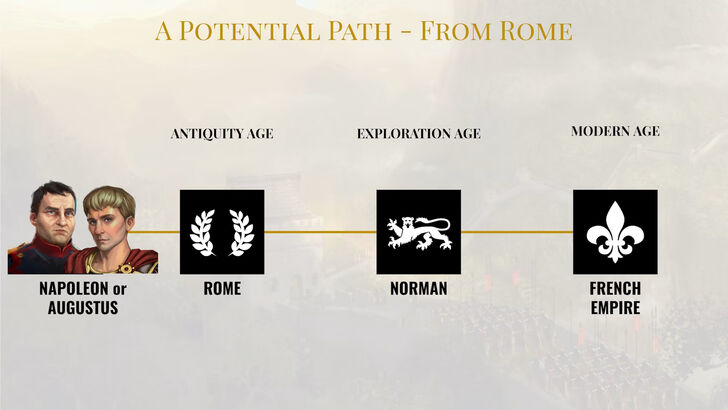
This transition isn't random; connections must be historically plausible. For instance, the Roman Empire might transition to the French Empire, potentially with the Norman Empire serving as a bridge. The player's leader remains consistent across Ages, maintaining a sense of continuity and rivalry. The "overbuild" feature allows for the construction of new buildings atop existing ones, but Wonders and certain structures persist throughout the campaign.
This innovative approach allows players to experience multiple civilizations within a single playthrough, offering diverse challenges in cultural, military, diplomatic, and economic spheres while maintaining a connection to a familiar leader.